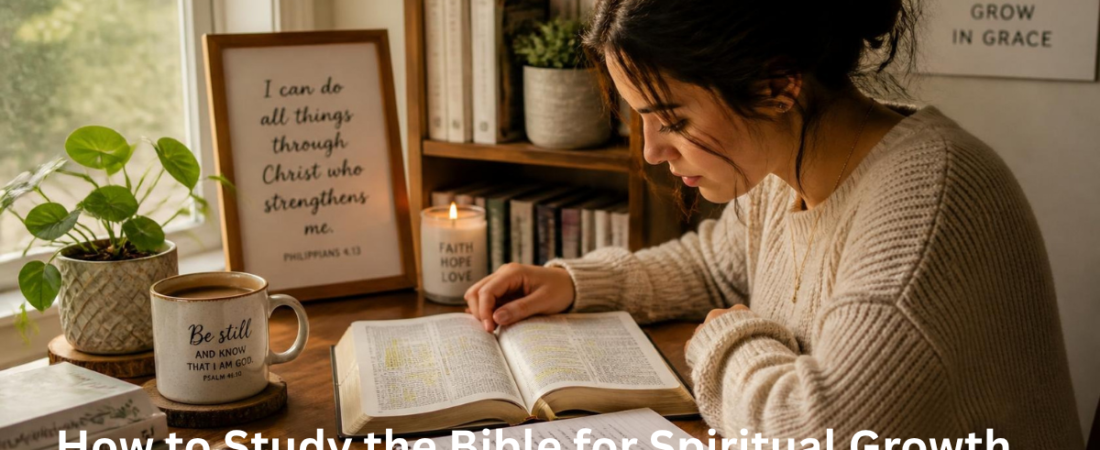
Many Christians begin reading the Bible with sincere intentions but eventually wonder why it feels difficult to stay consistent or why the words don’t seem to transform everyday life. Spiritual growth doesn’t come from reading more chapters alone—it comes from understanding God’s Word, reflecting on it, and applying its truth with faith and obedience.
Whether you’re a new believer or someone looking to deepen your relationship with God, learning how to study the Bible effectively can help you grow in wisdom, strengthen your prayer life, and develop lasting spiritual habits. This guide walks you through practical Bible study methods, daily routines, and simple techniques that make Scripture meaningful and applicable.
Why Bible Study Matters for Spiritual Growth
Reading the Bible is one of the most important spiritual disciplines because it reveals God’s character, teaches His promises, and guides believers in everyday decisions. Through Scripture, Christians gain wisdom, encouragement, correction, and hope while growing closer to Jesus Christ.
Consistent Bible study helps you:
- Build a stronger relationship with God
- Develop spiritual maturity
- Understand biblical truth with confidence
- Strengthen your faith during challenges
- Apply God’s wisdom in daily life
- Grow in grace, obedience, and discipleship
Instead of treating Bible reading as a daily task, approach it as a conversation with God that shapes your heart and mind over time.
As you study Scripture, you’ll also discover how biblical hope strengthens faith and encourages believers during every season of life.
Bible Reading vs. Bible Study: What’s the Difference?
While these terms are often used interchangeably, they have distinct purposes.
| Bible Reading | Bible Study |
| Focuses on reading larger portions of Scripture | Examines passages carefully for deeper understanding |
| Helps you become familiar with God’s Word | Helps you understand meaning, context, and application |
| Usually follows a reading plan | Involves observation, interpretation, and reflection |
| Builds consistency | Produces deeper spiritual insight |
Both practices are valuable. Reading provides the bigger picture of God’s plan, while studying helps you understand how individual passages apply to your life.
How to Study the Bible for Spiritual Growth: Step by Step
- Begin With Prayer
Before opening the Bible, ask God for wisdom and understanding. Invite the Holy Spirit to guide your thoughts and help you recognize what He wants to teach you.
A simple prayer might be:
“Lord, open my heart to Your Word. Help me understand Your truth and give me the courage to apply it today.”
Starting with prayer reminds us that spiritual growth depends on God’s guidance, not just our own effort.
- Choose a Bible Translation That Fits Your Reading Style
If you’re new to Bible study, select a translation that balances readability with accuracy.
Popular options include:
- New International Version): Clear and beginner-friendly.
- English Standard Version): More literal while remaining readable.
- New Living Translation): Easy to understand for new Christians.
The best Bible translation is the one you’ll read consistently while accurately communicating God’s Word.
- Start With the Right Books of the Bible
Many beginners feel overwhelmed by starting in Genesis and trying to read straight through.
Instead, begin with books that introduce the life and teachings of Jesus Christ or offer practical guidance for Christian living.
Good starting points include:
- The Gospel of John – Learn about Jesus’ life, love, and mission.
- The Book of James – Practical wisdom for everyday faith.
- Psalms – Encouragement, worship, and honest prayers.
- Proverbs – Daily wisdom for wise decision-making.
These books help build a strong foundation before exploring more challenging sections of the Old Testament. If you’re still unsure where to begin reading the Bible, focusing on these books can make the learning process less overwhelming and more meaningful.
Use a Simple Bible Study Method
Having a structured approach prevents Bible study from becoming confusing or overwhelming.
The SOAP Method
One of the easiest Bible study methods for beginners is the SOAP Method.
S – Scripture
Choose one passage or verse to read carefully.
O – Observation
Ask:
- What is happening?
- Who is speaking?
- What stands out?
- What does this teach about God?
A – Application
Consider how the passage relates to your current circumstances.
Questions might include:
- What should I change?
- Is there a promise to trust?
- Is there an example to follow?
- Is there a warning to avoid?
P – Prayer
Finish by praying about what you’ve learned and asking God to help you live according to His Word.
The Inductive Bible Study Method
If you want a deeper understanding of Scripture, the Inductive Bible Study method offers a thoughtful framework.
It follows three simple stages:
- Observation – What is the passage clearly saying?
- Interpretation – What did this passage mean to its original readers?
- Application – How should this change the way I live today?
This method encourages careful reading rather than making assumptions, helping you understand biblical context before applying it personally.
Build a Daily Bible Study Routine
A consistent routine often matters more than studying for long periods once in a while. Even 15 to 20 focused minutes each day can strengthen your relationship with God over time.
A simple daily Bible study routine might look like this:
- Begin with prayer.
- Read one chapter or a short passage.
- Write down observations in a notebook or prayer journal.
- Identify one practical application.
- End with prayer and thanksgiving.
Choose a regular time when you’re least likely to be distracted. Some people prefer a quiet morning before work, while others find evenings more reflective. The best schedule is the one you can maintain consistently.
Seven Steps to Spiritual Growth Through Bible Study
If you’re wondering how Bible study leads to lasting transformation, focus on these seven practical steps:
- Pray for understanding before reading.
- Read Scripture consistently rather than occasionally.
- Observe the passage carefully without rushing.
- Understand its original meaning and context.
- Apply biblical truth to everyday decisions.
- Memorize meaningful verses to strengthen your faith.
- Live out what you’ve learned through obedience and service.
These practices form some of the most important foundations for spiritual growth, helping you develop lifelong habits rooted in God’s Word.
How to Apply Bible Verses to Daily Life
Studying Scripture becomes meaningful when it influences the way you think, speak, and respond to everyday situations. Instead of asking, “What did I learn?”
Here are practical ways to apply God’s Word:
- Forgive someone after reading about forgiveness.
- Replace worry with prayer after studying God’s promises.
- Respond to difficult relationships with kindness and patience.
- Make decisions based on biblical wisdom instead of emotions.
- Practice generosity, humility, and honesty in daily life.
For example, after reading James 1:22, don’t simply agree with the message. Look for one practical action you can take that day to become a doer of the Word rather than only a hearer.
The Five P’s of Bible Study
The Five P’s provide a simple framework for meaningful Bible study.
- Position Yourself to Hear God
Approach Scripture with humility, prayer, and an open heart.
- Ponder the Passage
Read slowly and reflect on what the verses reveal about God’s character and His purpose.
- Pull Out the Principles
Identify timeless biblical truths that apply beyond the original audience.
- Personalize the Truth
Ask how these principles relate to your current circumstances, relationships, and spiritual journey.
- Practice What You Learn
Real spiritual growth happens when biblical knowledge becomes daily obedience.
The Seven C’s of Bible Study
Many Christians use the Seven C’s as a practical checklist while studying Scripture.
- Context – Understand the historical and literary background.
- Content – Observe what the passage actually says.
- Cross-References – Compare related Scriptures.
- Culture – Consider the customs and setting of the time.
- Christ – See how the passage points to Jesus Christ and the Gospel.
- Conviction – Allow God’s Word to challenge and correct you.
- Commitment – Decide how you will respond through faithful action.
Practical Ways to Grow Spiritually Through Bible Study
Bible study is most effective when combined with other spiritual disciplines that strengthen your relationship with God.
Consider adding these habits to your routine:
- Pray before and after reading.
- Memorize one Bible verse each week.
- Keep a prayer journal.
- Spend a few minutes in Scripture meditation.
- Join a small group or Bible study fellowship.
- Attend church regularly for biblical teaching.
- Share the insights you gain with family or friends.
- Review previous notes to track spiritual growth.
Together, these practices support lifelong Christian discipleship and steady spiritual maturity.
Bible Journaling for Beginners
Writing down what you learn helps you remember and apply Scripture more effectively.
Your journal doesn’t need to be complicated. Include:
- The date and Bible passage
- Key observations
- Questions you have
- Lessons you learned
- Personal prayers
- One action step for the day
Over time, your journal becomes a record of how God has worked in your life and answered prayers.
Common Bible Study Mistakes to Avoid
Many people become discouraged because of unrealistic expectations or inconsistent habits.
Avoid these common mistakes:
- Reading too quickly without reflection.
- Studying only difficult passages while ignoring the bigger picture.
- Skipping prayer before reading.
- Trying to read too much at once.
- Reading without applying the message.
- Comparing your progress with others.
- Letting a few missed days discourage you from continuing.
Remember that consistency matters more than perfection. A faithful daily habit produces lasting spiritual growth.
A Simple Weekly Bible Study Plan
If you’re unsure how to stay consistent, follow this beginner-friendly schedule.
| Day | Focus |
| Monday | Read a Gospel passage and record observations. |
| Tuesday | Study one chapter from Proverbs for wisdom. |
| Wednesday | Read a Psalm and spend time in prayer. |
| Thursday | Practice the SOAP Method on a short passage. |
| Friday | Memorize one meaningful Bible verse. |
| Saturday | Review your journal and reflect on the week. |
| Sunday | Worship, attend church, and reinforce what you’ve learned. |
This balanced routine combines Bible reading, reflection, prayer, and practical application without becoming overwhelming.
Helpful Bible Study Tools
While God’s Word is the primary resource, a few simple tools can make study easier.
Helpful options include:
- A beginner-friendly Study Bible
- A Bible journal or notebook
- A prayer journal
- Bible reading plans
- Bible commentary designed for beginners
- Free online Bible study resources
- Bible study workbooks
- Bible apps with reading plans and note-taking features
Choose tools that encourage consistency rather than becoming distractions.
FAQ’s
Q: How do I study the Bible for spiritual growth?
Start with prayer, read a manageable passage, observe its meaning, understand the context, apply it to your daily life, and finish by praying about what you’ve learned. Consistency is more important than reading large amounts.
Q: What are the seven steps to spiritual growth?
Pray, read Scripture consistently, observe carefully, understand the context, apply biblical truth, memorize Scripture, and live out God’s Word through obedience and service.
Q: What are the five P’s of the Bible study method?
The Five P’s are Position, Ponder, Pull Out Principles, Personalize, and Practice. Together, they provide a simple framework for understanding and applying Scripture.
Q: What are the seven C’s of Bible study?
The Seven C’s are Context, Content, Cross-References, Culture, Christ, Conviction, and Commitment. They help readers interpret the Bible accurately while encouraging personal transformation.
Q: Which books of the Bible should beginners read first?
Many beginners start with the Gospel of John, James, Psalms, and Proverbs because they introduce Jesus’ teachings, practical Christian living, worship, and godly wisdom.
Q: How long should I study the Bible each day?
Even 15 to 20 minutes of focused Bible study each day can build consistent spiritual habits. The key is regular engagement with Scripture rather than long, occasional sessions.
Q: Do I need a Study Bible or Bible commentary?
No. A regular Bible is enough to begin. However, a Study Bible or beginner-friendly commentary can provide historical context and explanations that make difficult passages easier to understand.
Q: Can I grow spiritually by studying the Bible alone?
Personal Bible study is essential, but combining it with prayer, worship, church fellowship, and Christian community often provides encouragement, accountability, and opportunities to grow in faith alongside others.
Conclusion
Learning how to study the Bible for spiritual growth is less about finding the perfect method and more about developing a faithful relationship with God through His Word. Whether you choose the SOAP Method, Inductive Bible Study, or a simple daily reading routine, lasting transformation comes from understanding Scripture and putting it into practice.
Start with one passage, pray for wisdom, reflect on what God is teaching you, and take one practical step of obedience each day. Over time, those small, consistent habits will deepen your faith, strengthen your prayer life, and help you grow into a mature follower of Jesus Christ. As you continue studying God’s Word, you’ll discover that spiritual growth is not a destination but a lifelong journey shaped by grace, truth, and faithful discipleship.